Friday, January 10, 2014

Third GRCA park Opens for Winter Activities


Another Grand River Conservation Authority Park is open for winter activities after debris was removed in the wake of the December ice storm.  Laurel Creek Conservation Area, 625 Westmount Rd., Waterloo opened for cross-country skiing Friday morning. 

Two other GRCA parks had previously opened for ice fishing: Shade’s Mills in Cambridge and Belwood Lake near Fergus.  However, the weekend thaw may interfere with activities at the three open parks for a few days. The warm weather and rain expected this weekend could curtail some activities. Customers should check the Winter Activity listing in the Newsroom section of the GRCA website at www.grandriver.ca or call the parks directly for updates.

Pinehurst Lake, north of Paris, remains closed as crews continue to clean up from the  ice storm. GRCA staff are using font-end loaders and wood chippers to clear branches and trees that litter roadways, trails and parking lots.

Four nature centres are open but only for school programs and GRCA-organized events: Shade’s Mills (Cambridge), Apps’ Mill (Brantford), Guelph Lake and Laurel Creek (Waterloo).
Most other GRCA facilities remain closed in the wake of the storm which damaged thousands of trees on the 20,000 hectares of property owned by the GRCA.

That includes:
·         Elora-Cataract Trailway, Cambridge-Paris Rail-Trail, SC Johnson Trail (Paris to Brantford) and Brantford-Hamilton Rail-Trail
·         Other GRCA paid-admission parks, which are normally closed for the winter: Conestogo Lake, Elora Gorge, Elora Quarry, Guelph Lake, Rockwood, Brant and Byng
·         Free-entry natural areas such as Starkey Hill (Guelph), Dumfries (Cambridge), Puslinch Tract (Cambridge), Snyder’s Flats (Bloomingdale), FWR Dickson (south of Cambridge) and Apps’ Mill (west of Brantford).
GRCA staff, supplemented by outside contractors,  have been working to clear trees and branches from public areas. The biggest danger is with partially-damages branches and trees, which are at risk of falling on users.

Self-help efforts on Elora-Cataract Trailway may actually raise risk level
GRCA staff are aware that some people are going onto GRCA trails and other properties to remove downed branches so they can use the properties. In particular, some people have been removing obstructions on the Elora-Cataract Trailway to open it for snowmobile use.  However, in some cases they have left the trees and branches dangerously close to the trail, putting snowmobiles at risk. They are also not dealing with overhead dangers, which imperils snowmobilers who may think the trail has been cleared, but could run into a newly-fallen tree or branch.  Please stay off of the Elora-Cataract Trailway and all other GRCA trails until staff  have made them safe for public use.

Monday, September 23, 2013

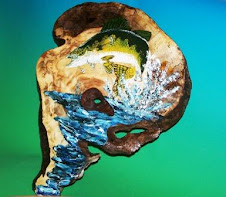
Angus Burns Wildlife Artist


There is just something about wood – the smell, the feel, the beauty – it’s almost seductive.  Since ancient times it has given us warmth, shelter, and solitude.  It imparts a feeling of things wild and free that live in harmony with their surroundings.  Could there possibly be a better way to portray the images of wild things than through the natural beauty of wood.

If you’ve ever visited the St. Jacobs Farmers Market, you’ve likely seen Freelton artists Angus Burns quietly sitting, creating masterpieces on wood.  Whether it’s a unique living room table, custom pet portrait, or small wall hanging his skill and love of the outdoors manifests itself through every piece of art he creates.

Although Angus always had a flare for drawing, even making his own Christmas cards as a child, it was many years later when a tree, a few cartons of cigarettes, and a trip to Vancouver by a friend conspired to make him realize his full artistic potential.

Working as a cook in a lumber camp after a felled tree put him on the disabled list, a fellow logger who had seen some of his personal sketches, handed him a couple of slabs of wood.  He asked Angus if he could paint some ducks on the wood.  In return he was to receive a couple of cartons of cigarettes.  It seemed like a good way to pass the time and selling the extra cigarettes in camp could put some extra change in his pocket.  Over two months he produced 30 pieces and it seemed like a good arrangement.  That is until a friend returned from a weekend in Vancouver where he had seen some of Angus’s paintings for sale.  Angus was stunned to find that his artwork was selling for three to four hundred dollars each.  Well, needless to say the money he was making off of the cigarettes began to look a little less attractive.  That was in 1978 and he’s never looked back.

Art dealers and prominent retail stores became attracted to Angus unique works and as a result his work has been displayed in galleries such as Kleinburg’s Regal Collection, Bowring’s Canadiana Collection at the Toronto Eaton Center.  Their images and carvings of wolves, deer, moose, and even humming birds adorn the homes of nature lovers around the world, as well as those of the rich and famous.  The likes of hockey greats Jean Beliveau and Guy Lafleur, comedian Jim Flynn, and singer Michael Burgess have sought out his unique works of art.  Angus even spent some time as resident artist at Canadian Carver, the famous tourist stop just north or Sault Ste. Marie.

Today much of his time is spent producing custom pet portraits for many visitors to the St. Jacobs Market where you will find him year round on Thursday and Saturday.  Thankfully he was located in “Peddlars Village” at the market and was spared from the fire that consumed the main market building on the Labour Day weekend. 

Drop by and say hi; maybe you’ll find that unique Christmas gift for someone special.

Friday, June 29, 2012

Environmental Sustainability – Think Local


This past week I was invited to attend a forum hosted by Sustainable Waterloo Region, a not-for-profit organization that promotes sustainable development and practices throughout Waterloo Region in Southwestern Ontario.  I’m not really sure what I thought about this organization prior to the meeting, if indeed I thought anything at all, but I must say that it’s been a long time since I have been in the presence of such a dynamic, pragmatic, and dedicated group of individuals.  Enthusiasm and purpose radiated from everyone, and it was infectious.

The forum itself was the last in a series of educational forums that all had to do with sustainable environmental issues, primarily at a local level.  The theme of this particular forum was “From RIO to Waterloo Region: Advancing Our Green Economy”.  It was perfectly timed to coincide with the end of the conference so everything was still fresh and relevant.  It included a presentation by Dr. AmeliaClarke from the University of Waterloo who attended the conference.

Now I wasn’t sure whether I would walk into a room filled with climate change fear mongers, a nice group of individuals that were well intentioned but rudderless, or a government funded bureaucratic money pit.  I was pleasantly surprised to find that none of these images were correct.  Sustainable WR is unique and they are changing the way we think; not by rhetoric and fear mongering, but through positive action.  In fact, this group has been so successful that other “sustainable” organizations are beginning to follow their model.  I won’t dwell further on that here because you can get all the facts from the Sustainable Waterloo Region website.

I was really pleased to see the pragmatism of Sustainable WR flow through to the thoughts presented by the speakers at the forum.  I was actually surprised that they reflected many of my personal beliefs in regards to the environment; these are some of my personal beliefs:
  • Governments (left, right, or center) raise their head above the crowd only when there are political points to be scored.
  • Governments have neither the will, nor the means to affect worldwide environmental change.
  • Environmental change must become a groundswell movement at a local level, but on a global basis.  Not by demanding change, but by implementing change.
  • Don’t count on governments to lead; force them to follow.
  • Scare tactics don’t work.  If you can’t base your arguments on untainted, unbiased, independent studies there is no argument.
  • In any given debate you have polar opposite groups that represent about 10% of a population on each side.  The media focuses attention on rhetoric from these groups because it’s easy.  Where they should focus their attention is on the movement of the 80% in the middle.  For example you would have organizations like Green Peace on one side and the petroleum producers on the other side.  It’s the group in the middle that can be swayed that will ultimately direct government policy, so direct your energies towards the middle not the extremes.
  • Governments don’t do something simply because it’s the right thing to do; but people will.
  • People have become apathetic because they are bombarded by media hype, rhetoric and negativity.  Why?  Because, with few exceptions, media is more intent on looking for headlines than on researching meaningful data.  Media has become lazy!
  • NGOs need to lose the “nanny state” expectations and start to take action at a local level.
By now pretty much everyone has heard about the United Nations Conference on Sustainable Development commonly known as RIO 2012.  There was much media hype building up to the conference but after it was declared an abject failure it dropped from the media spotlight like a child’s toy that had outlived its novelty.  Like many people I watched news releases with guarded interest coupled with much skepticism, if not cynicism.  The world view of Canada has diminished to a point of irrelevance in terms of environmental sustainability; or so we are being told by the hardline environmental groups.  But was it really a failure?  Or, was it a reawakening to the realization that governments can't be counted on to do things for the right reason; an awakening to the fact that change can only be accomplished at a local level and used as catalyst to nudge government bureaucracy in the right direction.  In terms of focus RIO 2012 just may be the impetus needed to shift focus from national and international rhetoric to local action.

This view was in one way or another supported by all of the presenters at the forum.  These were, in order of appearance, Dr. AmeliaClarke from the University of Waterloo (who attended the RIO Conference), Mathew J. Hoffmann from the University of Toronto, Craig Haney – Directorof Marketing for Energent, and Carol Simpson from the WorkplacePlanning Board of Waterloo, Wellington, Dufferin. All of the speakers were dynamic, energetic, relevant, and brought a positive message.

I’m always reminded of a quote that I first heard many years ago, “How do you eat an elephant? One bite at a time.”  If you shift your focus to small manageable initiatives the end result will be achieved.  This, in my opinion, is what Sustainable Waterloo Region is all about and both politicians and media would do well to pay heed to this and other like-minded organizations.

SustainableWaterloo Region is always looking for volunteers, so if you want to get involved with a dynamic, forward-thinking organization give them a call.


Friday, November 18, 2011

Journey to Turtle Island

Each year the City of Brantford, Brant County, and Six Nations jointly present the Shining Star Tourism Awards.  Awards are handed out in several categories including Best Aboriginal Experience.  This year the Aboriginal Experience award went to Grand Experiences Canoe & Kayak Outfitters in Paris, Ontario, for their Journey to Turtle Island canoe trip.
 
A couple of years ago I took this trip as part of our Outdoor Writers of Canada conference and I can say first hand that the experience was exceptional.  Now I have paddled and fished the Grand extensively over the years and originally thought of this trip as simply a nice diversion at the end of our conference; I couldn’t have been more wrong.  Right from the time we met the professional, experienced guides from Grand Experiences I knew this trip would be something special.

Aside from the outstanding qualifications and experience of our guide – something you should look for and expect with any outfitter – I was impressed with his level of knowledge about the flora, fauna, and history of the region.  
This is a fantastic trip for inexperienced and seasoned paddlers alike because the 12 person “War Canoe” offers great stability and a chance to take a break to enjoy the scenery if you get tired along the 12 km route.  You paddle downstream through one of the last stands of Carolinian forest in Canada and have the illusion of being on a wilderness journey.  For much of the trip you will be paddling through the Grand River Exceptional Waters area, a unique fisheries and watershed management area managed by the Grand River Conservation Authority.

The highlight of our trip came as we gently nudged the canoe up to the shore of Turtle Island in the middle of the Grand River immediately across from Brant Conservation Area – just on the outskirts of the City of Brantford.  There we were greeted by a husband and wife team dressed in traditional First Nations attire from the Six Nations First Nation.  They led us quietly along a trail to a secluded natural amphitheater at the far end of the island where we were regaled with traditional First Nation stories, history, and dances.  There was a great deal of visitor participation and plenty of opportunities for photos and to ask questions.  At the end of our visit to Turtle Island we paddled back across the river to Brant Conservation area where we piled into the vans for the short journey back to Paris. 

Whether you’re visiting the region for the first time or are a long-time resident, this trip is a unique experience that you simply can’t miss.  Once again, congratulations to Grand Experiences for winning the Shining Star Tourism Award for Best Aboriginal Experience.  Take a minute and check out everything that the City of Brantford, Brant County, and Six Nations has to offer in the Discovery Guide.
©2011 Lloyd Fridenburg – All rights reserved click here for copyright permissions

Monday, September 26, 2011

Fergus Lions Club Receives Conservation Award


Ten years ago — on Sept. 1, 2001 — the Fergus Lions Club started creating a special place of remembrance on the banks of the Grand River.  It is a place where 350 trees of many species are now planted as a tribute to the lives and memories of special people. There are also 15 memorial benches.

The Fergus Lions Club is one of five recipients of a 2011 Grand River Watershed Award for creating the Grand River Arboretum and was honoured at an awards presentation on Sept. 15 in Cambridge.

“What was once a little used piece of land has been sensitively transformed into a pleasant, tranquil area,” said Trevor Ashbee, the horticulturalist for Centre Wellington. He drew up a list of 50 tree species and donors could select from the list.

Don Doyle came up with the idea and Joe Brooks became the driving force to get it going. Work crews turned up on Saturday mornings to plant and maintain the area.
About 150 people attended the official opening held 10 years ago this month (September 2001). The entrance is on the south side of Colquhourn Street between Beatty Line South and Johnson Street  at the south end of Beatty Line, just past Calquhoun, west of downtown Fergus. There is a wall of plaques of the many individuals and groups who have made contributions.

The Grand River Arboretum was a project of the Fergus Lions Club who held many Saturday morning work days to plant and landscape the property. “It really brought the club together. Every time we did something there was all kinds of stuff to eat and drink,” said Doyle.

Towards the centre of the park is the Lion’s Treea big old tree that stands strong and tall among those that have been planted over the past 10 years. “The beauty and quietness of this spot so close to the hustle and bustle of the town is a comfort and a refuge for family members who have planted trees in remembrance of loved ones,” says resident Roberta Vliestra of Fergus.

The land once belonged to the Grand River Conservation Authority, but is now owned by Centre Wellington Township, while Lion’s Club members look after the maintenance.
Now the project is complete and no new trees will be planted.  The Grand Valley Trail is next to the arboretum and the trail leads down the hill and along the Canadian Heritage Grand River.

By Janet Baine, GRCA Communications Specialist

Congratulations from Southern Ontario Outdoors to the dedicated volunteers from the Fergus Lions Club that are preserving our great outdoors heritage for future generations.  For more information about great outdoor activities in Fergus and Elora visit the Elora/Fergus website.